Bethany Edmunds
Associate Dean of Computing Programs - West Coast, Teaching Professor
Dr. Bethany Edmunds is a recognized leader in Computer Science and STEM education in North America. She has a Ph.D. in Computer Science, with a specialization in Artificial Intelligence, and is currently the Associate Director of Network Programs, and Director of Computing Programs at Northeastern University’s Vancouver campus. Bethany is passionate about breaking down barriers to create greater diversity, access and inclusivity within the technology community. She brings together expertise in software development, machine learning, and educational innovation to create STEM opportunities for people of all backgrounds and abilities.
Bethany’s commitment to breaking ground in tech education began early. While earning her Ph.D. in Machine Learning at Rutgers University in her native New Jersey, she was the co-organizer for the second international Women in Machine Learning Workshop. She continues to actively encourage women and girls to pursue careers in tech, speaking regularly at women in technology events. She is also currently on the Board of Directors for Women in Machine Learning.
Prior to joining Northeastern, Bethany was the first female Associate Dean of Computing at British Columbia Institute of Technology where she led the pedagogical innovation of the Computer Information Technology Program. Her industry experience includes developing flight simulation software while working for the Federal Aviation Administration (FAA), the government body that oversees all aspects of civil aviation in the United States.
Dr. Edmunds has been named one of BC Business's Most Influential Women in STEM, Business in Vancouver's Forty under 40, and YWCA’s Women of Distinction. She is a broadly published researcher, and sought after media expert on the subject of improving diversity in STEM education.
Education:
• Ph.D. in Computer Science, Machine Learning specialization, Rutgers University
• Bachelor of Science in Computer Science, Rowan University
Research Interests:
• Generalized reinforcement learning for mobile robotics
Awards and Recognition:
• YWCA Metro Vancouver Women of Distinction Award, Education, Training, and Development, 2019
• Business in Vancouver, Top Forty under 40, 2018
• BC’s Most Influential Women, BC Business Magazine, 2018
• Brian Thom Advancing Teaching Excellence Award, 2016
• National Science Foundation’s Integrative Graduate Education and Research Training Fellowship, 2006 - 2008

Logan Schmidt
Director of Computing Programs, and Assistant Teaching Professor, Khoury College of Computer Sciences
Logan Schmidt (he/him) is an assistant teaching professor and director of computing programs at the Khoury College of Computer Sciences at Northeastern University in Vancouver. He teaches computer science courses and aims to introduce newcomers in the field to computer science fundamentals and concepts that will help them build careers, adapt to changing technologies and new situations, and launch themselves into challenging new projects. He also teaches courses related to security and privacy.
Dr. Schmidt's research interests include investigating the privacy impacts of new devices and tools, as well as evaluating the efficacy of interventions in computer science education, particularly at the curricular level. Dr. Schmidt received his doctorate in rhetoric from Carnegie Mellon University, where he researched the effective communication of technical and scientific information to lay audiences. He is proud to be a product of Khoury’s own Align program, and he is committed to the mission of CS for All.

Jack Thomas
Assistant Teaching Professor, Assistant Director of Computing Programs
(he/him)
Jack Thomas is an assistant teaching professor and assistant director of computing programs at the Khoury College of Computer Sciences at Northeastern University in Vancouver. His area of teaching includes robotics, social implications of computing, databases, data structures, algorithms and software engineering.
Prior to joining Northeastern in 2022, he worked as a sessional instructor at Simon Fraser University and a data analyst at the New Brunswick Department of the Environment. Thomas has been published in the 2017 IEEE International Conference on Robotics and Automation (ICRA) and the 2018 and 2019 EEE/RSJ International Conferences on Intelligent Robots and Systems (IROS). Outside of teaching, he is an avid Dungeons and Dragons player, loves listening to podcasts, and created a game that's now free on Steam called the Throne of Bernicia.

Lino Coria Mendoza
Teaching Professor and MS in Artificial Intelligence (MSAI) Program Director
(he/him)
Lino is an engineer, educator and researcher working in computer vision applications. Lino has over fifteen years of experience working in both industry and academia.
Lino has conducted research in the fields of image processing and computer vision. He has published multiple papers in topics such as blind signal separation, digital image and video watermarking, high dynamic range imaging, stereoscopic video, and 3D quality of experience.
For over six years, he was a Professor at ITESO University in Guadalajara, Jalisco, Mexico. Additionally, he has taught several courses at the undergraduate and graduate levels at the University of British Columbia, Langara College, and CINVESTAV (Mexico).
For the past nine years, Lino has worked as an engineer at several Vancouver startups developing computer vision algorithms and machine learning models for a variety of applications, including online video and metadata optimization, custom footwear design, and agricultural technology.
Lino is a member of the Society for Canadian Women in Science & Technology (SCWIST) and has volunteered as a mentor with the Immigrant Employment Council of BC (IEC-BC) since 2016.
Education:
• M.Eng., Electrical Engineering, McMaster University
• Ph.D., Electrical Engineering, University of British Columbia (UBC)
Research Interests:
• Computer Vision
• Image Processing

Juancho Buchanan
Professor of the Practice, Khoury College of Computer Sciences
Juancho Buchanan is a professor of practice at the Khoury College of Computer Sciences at Northeastern University. He earned his bachelor’s in computer science from the University of Windsor, master’s in computer science from the University of Toronto, and PhD in computer science from the University of British Columbia.
His areas of teaching focus on computer graphs and the foundations of software engineering.
Prior to joining Northeastern, Buchanan worked as the vice president of engineering at Staffbase, the manager of engineers for Amazon web services, the director of core technology for Hothead Games, a software development manager for Amazon, and more. He is also currently the senior director of software engineering at Bananatag.
In his free time, he focuses on building a pipeline to generate and 3D print stained glass windows.
Education:
● PhD in Computer Science, University of British Columbia
● MS in Computer Science, University of Toronto
● BS in Computer Science, University of Windsor
Research Interests:
● Computer graphics
● 3D printing
● Practice of software engineering

Richard Hoshino
Teaching Professor, Khoury College of Computer Sciences
(he/him)
Richard Hoshino is an Associate Teaching Professor at Northeastern University in Vancouver. He was previously a mathematician for the Government of Canada, a post-doctoral fellow at the National Institute of Informatics in Tokyo, and most recently a professor of mathematics and computer science at Quest University Canada in Squamish, British Columbia. He obtained his Ph.D. in Mathematics from Dalhousie University in Halifax, Nova Scotia.
Richard has published 35 research papers across numerous fields, including graph theory, biometric identification, sports tournament scheduling, and optimal school timetabling. He has consulted for a billion-dollar professional baseball league and three Canadian TV game shows.
Richard has presented at the annual conference of the Association for the Advancement of Artificial Intelligence (AAAI) six times in the past decade, winning their Deployed Application Award twice. His work for the Canada Border Services Agency included helping reduce wait times at Canadian border crossings as well as creating risk scoring algorithms for marine cargo containers.
Richard is also heavily involved in community outreach, and has visited over 50 high schools, conducting workshops on problem-solving and computational thinking for thousands of students and teachers. He was the 2017 recipient of the Adrien Pouliot Award, awarded by the Canadian Mathematical Society as a lifetime achievement award to celebrate “significant and sustained contributions to mathematics education.” He is also the author of the novel “The Math Olympian,” currently ranked #1 by GoodReads for Best Young Adult Books that Empower.
Education
• Ph.D. Math, Dalhousie University
• M.Sc., Dalhousie University
• B.Math, University of Waterloo
• B.Ed, Queen’s University
Research Interests
• Scheduling Optimization
• Operations Research
• Mathematics Pedagogy
Awards and Recognition
• Adrien Pouliot Award, Canadian Mathematical Society, 2017
• Action Canada Fellowship, 2003
• Silver Medallist, International Mathematical Olympiad, 1996
Selected Publications
• R. Hoshino and I. Fabris, Optimizing Student Course Preferences in School Timetabling, Proceedings of the 17th International Conference on the Integration of Constraint Programming, Artificial Intelligence, and Operations Research (CPAIOR 2020), Vienna, Austria, May 2020.
• R. Hoshino and M. Notarangelo, Computational Intractability and Solvability for the Birds of a Feather Game, Proceedings of the 9th EAAI Conference on Artificial Intelligence (EAAI 2019), Honolulu, Hawaii, January 2019.
• R. Hoshino, A. Slobodin, and W. Bernoudy, An Automated Employee Timetabling System for Small Businesses, Proceedings of the 30th IAAI Conference on Artificial Intelligence (IAAI 2018), New Orleans, Louisiana, February 2018. Winner of the Deployed Application Award.
• R. Hoshino and J. Beairsto, Optimal Pricing for Distance-Based Transit Fares, Proceedings of the 30th IAAI Conference on Artificial Intelligence (IAAI 2018), New Orleans, Louisiana, February 2018.
• R. Hoshino and C. Raible-Clark, The Quest Draft: an Automated Course Allocation Algorithm, Proceedings of the 26th IAAI Conference on Artificial Intelligence (IAAI 2014), Quebec City, Quebec, July 2014. Winner of the Deployed Application Award.

Ernesto Peña
Associate Teaching Professor in the College of Arts, Media & Design
Ernesto Peña, PhD, is an Associate Teaching Professor and the Coordinator of the Master of Science in Information Design and Data Visualization in Vancouver. Ernesto’s collective teaching experience spans over 20 years, encompassing Mexico, his home country, and Canada, where he has lived and worked since 2012. Both his scholarship and teaching approach emphasize interdisciplinary perspectives and knowledge mobilization. Ernesto’s academic work has been published in journals such as the Journal of Visual Literacy, Visible Language, Leonardo, Design Issues, InfoDesign, and Convergence. His research interests include, but are not limited to, Digital Humanities, Semiotics, Transmediation, and Glitch.
Before joining CAMD/Northeastern University, Ernesto served as Director of Research for a Vancouver-based financial technology startup and was an Adjunct Professor in the Masters in Educational Technology program at the University of British Columbia in Vancouver.
Before joining Northeastern, she served as department chair of Graphic Design at MICA in Baltimore. She holds a BFA from Carnegie Mellon University, an MFA from Rhode Island School of Design, and an MA from the Bard Graduate Center.

Jamie Forrest
Associate Teaching Professor and Associate Program Director of the MSHI
Dr. Jamie Forrest is a global health leader, clinical researcher, and technologist whose career spans three continents. He serves as Associate Director of the Master of Science in Health Informatics (MSHI) program at Northeastern University’s Vancouver campus.
Dr. Forrest spent five years in Rwanda working with the Ministry of Health, leading implementation of a national health informatics platform that aggregated district-level data to give ministry leadership real-time visibility across the country’s health system. During that period, he also contributed to the planning and execution of the International Conference on AIDS and STIs in Africa (ICASA) hosted in Kigali in 2019.
Returning to Canada at the start of the COVID-19 pandemic, Dr. Forrest joined the founding team of Purpose Life Sciences and the TOGETHER Adaptive Platform Trial, among the earliest and largest sources of evidence on the safety and efficacy of repurposed therapies. As the trial’s Executive Director, he oversaw the evaluation of more than 12 candidate therapies across a recruitment effort of more than 12,000 patients spanning 22 clinical sites in six countries — Brazil, Canada, Pakistan, Rwanda, South Africa, and the United States — over three years.
Concurrently, he served as Senior Researcher in Health Research Methods, Evidence & Impact at McMaster University (2022–2025), working with trial’s Principal Investigators, deepening his methodological expertise in trial design. He subsequently helped launch Purpose Africa, with a mission to support African Ministries of Health in developing infrastructure and capacity for clinical research and strengthening end-to-end drug discovery and biomedical manufacturing value chains across the continent — a program that continues today.
Alongside his global health work, Dr. Forrest has a deep interest in computer science. As the first employee of Counterforce AI, he developed a suite of social listening tools capable of monitoring multiple channels and actioning tasks to mitigate the harms of online disinformation, a platform that has proven particularly valuable during public health emergencies. He remains an advisor to the continuing development of the Counterforce AI platform.
Dr. Forrest earned a Doctorate of Philosophy in Population & Public Health from the University of British Columbia (2022) and a Master of Public Health with a Global Health concentration from Simon Fraser University (2009). He has co-authored more than 60 peer reviewed publications in his career and brings a unique combination of policy, clinical, and technical expertise to the MSHI program at Northeastern, and is passionate about training the next generation of globally-minded health informatics leaders in evolving AI-enabled environments.
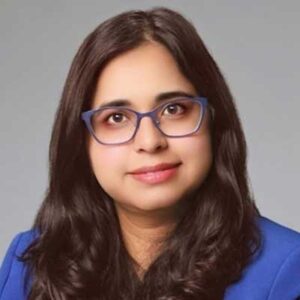
Hazra Imran
Associate Teaching Professor
Hazra Imran is an associate teaching professor in the Khoury College of Computer Sciences at Northeastern University, based in Vancouver.
With more than 18 years of experience in academia, Imran teaches database systems, capstone projects, web development, and Align program courses. Her research investigates how AI-driven analytics and large language models can enhance personalized and emotion-aware learning experiences, particularly through adaptive gamification strategies. Her work applies human–computer interaction principles to design engaging, data-driven educational tools that dynamically adjust to learners’ cognitive and emotional states. Additionally, Imran explores theoretical and empirical approaches to game-based learning, examining how personalization techniques and affective computing improve student motivation, engagement, and long-term knowledge retention.
Beyond academia, Imran engages in research collaborations and technological advancements in education, regularly presenting her work at global conferences. She has served on numerous university and journal committees and maintains an active publication history. She holds a PhD in computer science and completed a Postdoctoral Fellowship at Athabasca University in Canada, where she focused on advanced adaptivity and personalization in learning systems.
When she is not teaching or researching, Imran enjoys cooking and is currently training in Bharatanatyam, a 2,000-year-old classical Indian dance form.

Rushdi Alsaleh
Associate Teaching Professor, College of Engineering
Dr. Rushdi Alsaleh is an esteemed Assistant Professor of Data Science and Machine Learning at University Canada West (UCW) and a part-time Lecturer at Northeastern University. With over 12 years of experience in academia, research, and consulting, Dr. Alsaleh has established himself as a leading expert in data-driven modeling, big data analytics, artificial intelligence, and machine learning. Dr. Alsaleh has published more than 20 peer-reviewed articles in top-tier journals, amassing over 470 citations with an H-Index of 12. His research frequently explores the intersections of artificial intelligence with game theory, robotics, and multiagent systems.
Dr. Alsaleh holds a Ph.D. in Engineering from the University of British Columbia (UBC) and has completed a Post-Doctoral Fellowship at the same institution. His dedication to education is reflected in his student-centric teaching approach, course development, and the use of simulations in teaching. Beyond academia, Dr. Alsaleh serves as an Operations Manager at Hayat Contracting in Coquitlam, BC, where he oversees projects, manages resources, and ensures quality and safety standards are met. His contributions to the field extend to several practical projects and consultations with various organizations, showcasing his ability to bridge the gap between theoretical research and practical applications.

Aanchan Mohan
Assistant Teaching Professor, Khoury College of Computer Sciences
(he/him)
Aanchan Mohan is an assistant teaching professor in the Khoury College of Computer Sciences at Northeastern University, based in Vancouver. He is also an adjunct professor at the University of Victoria.
Mohan researches artificial intelligence and machine learning, with a focus on building inclusive, robust, and performant speech and language technology. He earned the prestigious Google Research Scholar Award in 2023, and his research program is supported by Google, MITACS, the University of Victoria, and Northeastern University.
Mohan collaborates with industry and academic partners in British Columbia, across Canada, and internationally. He also co-founded Happy Prime Inc., which works with community members to build inclusive communication software powered by the latest developments in AI. Happy Prime Inc.’s work has received support from InnovateBC and Mosaic BC’s WorkXP program.
Mohan has more than 10 years of industry experience, including management and technical leadership positions at startups and enterprise companies. His former employers include PAI Health, Nuance (since acquired by Microsoft), Global Relay, Malaspina Labs, and Synaptitude Brain Health (a spin-off from the University of British Columbia’s Djavad Mowfaghian Center for Brain Health).
Mohan contributes to the research community by reviewing at top-tier research venues. He has published his research at top-tier conference venues and holds several patents in the areas of recommender systems, biomedical signal processing, and speech recognition. He is also a highly sought after technical speaker and panelist at local, national and international venues.
Education:
• PhD in Electrical and Computer Engineering, McGill University — Canada
• MS in Electrical and Computer Engineering, Rutgers University
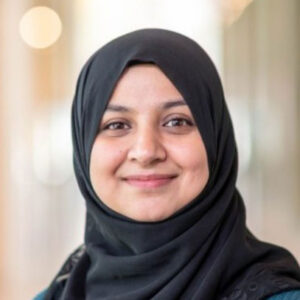
Qurat-ul-Ain Azim
Assistant Teaching Professor, College of Engineering
(she/her)
Dr. Qurat-ul-Ain Azim is an Assistant Teaching Professor at Northeastern University's Vancouver campus, where she teaches core courses in data science and analytics within the Master of Science in Data Analytics Engineering (MSDAE) program. Since joining Northeastern in 2023, she has developed and delivered numerous new courses across both in-person and dual-platform formats, and has supervised graduate students on thesis and capstone projects spanning a wide range of applied AI and data science topics.
Dr. Azim holds a Ph.D. in Mathematics from Imperial College London and a Master of Advanced Study in Mathematics from the University of Cambridge. Prior to joining Northeastern, she held a faculty position at COMSATS University Islamabad. Her research background spans applied mathematics and computational modeling, with more recent work extending into machine learning applications, and she has authored numerous peer-reviewed publications in international journals and conference proceedings.
Trained as a mathematician, Dr. Azim approaches data science and AI as systems built on principles that can be understood and reasoned about, rather than black-box techniques to be applied. Her teaching centers on building intuition before abstraction, so that students leave her courses able to explain why a model works, not just how to run it. This philosophy also shapes her strong emphasis on experiential learning, with active participation from industry partners woven throughout her courses and student project supervision, giving students hands-on exposure to real-world problems.
Beyond the classroom, Dr. Azim holds several academic leadership roles at the Vancouver campus, supporting program development, curriculum planning, and student experiential opportunities. She has coordinated partnerships with local technology and industry organizations to create hands-on student project opportunities, and represented the College of Engineering in regulatory review processes with BC provincial authorities. She is a frequent panelist and workshop facilitator on AI and machine learning topics, sharing her expertise with the broader academic and professional community.

Maryam Tanha
Mastercard Assistant Teaching Professor
Maryam Tanha is an assistant teaching professor in the Khoury College of Computer Sciences at Northeastern University, based in Vancouver.
Tanha’s research interests are deeply rooted in detecting Android malware and designing resilient software-defined networks. In 2022, as a faculty member at the BCIT School of Computing and Academic Studies, she received a grant to study how to use machine learning to detect and analyze Android malware, and to mentor undergraduate students in that topic.
Tanha joined Khoury College as a part-time lecturer in 2023 to teach computer networking fundamentals, then transitioned to a full-time role in 2025, excited by the chance to engage more deeply with students in the MS in CS and Align programs.
In her free time, Tanha enjoys jogging, traveling, and watching movies based on real events.

Ryan Rad
Associate Teaching Professor, Khoury College of Computer Sciences
Ryan M. Rad is an assistant teaching professor at the Khoury College of Computer Sciences at Northeastern University in Vancouver. He earned his bachelor’s in computer engineering from the University of Guilan, his master’s in computer science from the University of Malaya, and his PhD in applied sciences from Simon Fraser University. His areas of teaching include machine learning, data analytics, and visualization software engineering algorithms. Rad is currently research active in computational biology, machine learning, and personal health informatics.
To date, he has published more than 20 scientific papers with more than 500 citations, and an i10-index of 15. He served as a technical committee member or speaker for several top-tier computer science journals and conferences including IEEE TIP, IEEE TMI, ICCV, ICIP, VCIP, AAAI, and MICCAI. Having roots in entrepreneurship and business, he founded two companies over the last decade. Rad has led several data analytics and machine learning research projects delivering innovative, responsible, and cutting-edge AI, machine learning, and computer vision solutions to the enterprise, benefiting communities from healthcare to green technology. They are the fruit of more than 10 years' combined experience in academia and industry as a professor, researcher, engineer, and manager.
Prior to joining Northeastern University, he was an adjunct professor at University of British Columbia (UBC) and a professor at the MBA department of University Canada West (UCW). He also served as an instructor at Columbia College and Douglas College in the past. In industry, he worked as a researcher, engineer, team lead, and product manager for several startups and companies.
Education:
● PhD in Applied Sciences, Simon Fraser University — Canada
● MS in Computer Science, University of Malaya — Malaysia
● BE in Computer Engineering, University of Guilan — Iran
Research Interests:
● Machine learning
● Computer vision
● Generative models
● Data science
Awards and Recognition:
He has published more than 20 scientific papers with more than 500 citations, and an i10-index of 15. He served as a technical committee member or speaker for several top-tier computer science journals and conferences including IEEE TIP, IEEE TMI, ICCV, ICIP, VCIP, AAAI, and MICCAI.

Yvonne Coady
Visiting Professor, Khoury College of Computer Sciences
Yvonne Coady is a visiting professor of computer science at the Khoury College of Computer Sciences at Northeastern University. She is also a computer science professor at the University of Victoria and serves as an adjunct professor at the Centre for Digital Media in Vancouver. Coady works with Indigenous community members to develop software learning tools and platforms for improved access to remote education.
Coady’s research changes the way software developers and users utilize the collaborative medium that is the World Wide Web. She believes that the power to harness the power of cloud computing is on the horizon. Her ultimate goal is to take the enormous computing power that used to only be accessible to specialized researchers and share it with the community.
Education:
● Ph.D., Computer Science, University of British Columbia (UBC)
Research Interests:
● Scalable system infrastructures
● Aspect-oriented software development
● Distributed virtualization

Chinthaka Pathum Dinesh Herath Gedara
Assistant Teaching Professor, Department of Mechanical and Industrial Engineering
(he/him/his)
Dr. Chinthaka Pathum Dinesh is an Assistant Teaching Professor in the Department of Mechanical and Industrial Engineering within the College of Engineering at Northeastern University's Vancouver campus and an Adjunct Professor in the School of Engineering Science at Simon Fraser University. He is an AI researcher, educator, and industry advisor whose work focuses on developing intelligent systems that are powerful, reliable, interpretable, and capable of addressing complex real-world challenges.
His current research spans Neuro-Symbolic AI, Multimodal AI, Generative AI, Graph Neural Networks, machine learning, and computer vision. A central theme of his research is combining data-driven learning with structured knowledge and reasoning to develop more trustworthy and explainable AI systems. His work explores applications across healthcare, financial fraud and illicit transaction detection, energy and sustainability, and intelligent decision-making systems, building on his extensive research background in graph-based learning, signal and image processing, and 3D computer vision. Prior to joining Northeastern as a full-time faculty member, Dinesh held research positions at Simon Fraser University and York University and conducted research at the National Institute of Informatics in Tokyo, Japan.
Dinesh has authored more than 45 peer-reviewed research publications in leading international journals and conferences, including IEEE Transactions on Pattern Analysis and Machine Intelligence (TPAMI), IEEE Transactions on Image Processing, IEEE Transactions on Smart Grid, IEEE Transactions on Circuits and Systems II: Express Briefs, IEEE Signal Processing Letters, and Applied Energy. His research has received more than 1,150 citations, with an h-index of 19 and an i10-index of 27. His academic and research contributions have been recognized in Canada and internationally through the Governor General's Gold Medal, IEEE ICIP Top 10% Paper recognition, President's Awards for Scientific Publication, and several national and international competitive research fellowships and scholarships. He completed his PhD at Simon Fraser University, where his dissertation was defended with distinction and accepted as submitted, with no revisions required.
At Northeastern, Dinesh teaches in the MS in Data Analytics Engineering (MSDAE) program and has developed and taught several graduate courses, including Generative AI, Neural Networks and Deep Learning, Data Mining, and Data Management. His teaching emphasizes a strong understanding of fundamental concepts and sustained practice applying those concepts to solve real-world problems, helping students build the practical and analytical skill sets needed by today's technology sector and the industries of the future. He directly incorporates experiential learning into major course curricula and has introduced industry-standard evaluation processes. He also organizes hands-on workshops with industry partners to help reduce the skills gap between academia and industry.
Dinesh actively supervises and mentors graduate students conducting research in emerging areas of AI, including neuro-symbolic medical AI, trustworthy large language models, multimodal edge AI, graph-based cryptocurrency transaction analysis, fraud detection, and AI for renewable energy. His collaborations with industry and community partners - spanning renewable energy, healthcare, environmental intelligence, civic technology, and responsible AI - are advanced with Northeastern students through capstone and thesis projects. These experiences enable students to contribute to meaningful partner challenges while developing research, teamwork, communication, and professional skills.
Service and leadership are integral to Dinesh's work across academia, industry, and the community. At Northeastern, he contributes to faculty governance and institutional development through Faculty Development Senate committee service. Internationally, he serves as an Associate Editor of IEEE Transactions on Circuits and Systems for Video Technology (TCSVT) and contributes through editorial, peer-review, and technical committee roles for leading IEEE journals and conferences, including TIP, TSP, TMM, TSG, SPL, ICASSP, ICIP, ICME, and MMSP. Beyond academia, Dinesh works at the intersection of AI research, entrepreneurship, and industry innovation. He serves in technology leadership and advisory roles with startups in Canada and the United States, contributing expertise in Neuro-Symbolic AI and the development of reliable, transparent, and trustworthy AI solutions. He also supports technical workshops and industry-sponsored hackathons and actively participates in Vancouver's technology-community events. Together, these activities connect academic research and education with industry practice and community needs.
Education
• PhD in Signal and Image Processing, School of Engineering Science, Simon Fraser University, Canada, 2021
• BSc Eng. in Electrical and Electronic Engineering, University of Peradeniya, Sri Lanka, 2012
Research Interests
• Neuro-Symbolic AI
• Multimodal AI
• Generative AI and Large Language Models
• Graph Signal Processing
• Machine Learning and Deep Learning
• Computer Vision and 3D Point Cloud Processing
• AI for Healthcare, Energy, and Financial Security
Awards and Recognition
• Full-Time Faculty Professional Development Fund Award, Northeastern University, 2025
• Governor General's Gold Medal, Canada, 2022
• Post-Doctoral Fellowship Award, York University, 2021-2023
• PhD Dissertation Defended with Distinction and Accepted as Submitted with No Revisions Required, Simon Fraser University, 2021
• SFU President's PhD Scholarship, 2020
• Lang Wong Memorial Scholarship in Engineering Science, Simon Fraser University, multiple awards, 2018-2021
• IEEE ICIP Top 10% Paper Recognition, 2019
• IEEE Signal Processing Society Travel Grants, IEEE ICIP 2019 and IEEE ICASSP 2022
• VISTA Visiting Trainee Travel Award, York University, 2019
• NII International Internship Program Research Internship Award, Japan, 2018
• President's Awards for Scientific Publication, Sri Lanka, 2016 - 2019
• Prof. E. F. Bartholomeusz Prize, University of Peradeniya, 2012
• Best Research Paper Award, IET Annual Technical Conference, 2010
Selected Journal Publications
• C. Dinesh, G. Cheung, S. Bagheri, and I. V. Bajic, "Efficient Signed Graph Sampling via Balancing & Gershgorin Disc Perfect Alignment," IEEE Transactions on Pattern Analysis and Machine Intelligence, vol. 47, no. 4, pp. 2330-2348, 2025.
• C. Dinesh, G. Cheung, and I. V. Bajic, "3D Point Cloud Sampling via Graph Sampling and Gershgorin Disc Alignment," IEEE Transactions on Pattern Analysis and Machine Intelligence, vol. 45, no. 1, pp. 868-886, 2023.
• C. Dinesh, G. Cheung, and I. V. Bajic, "Graph-based 3D Point Cloud Video Super-Resolution via Partial Point Correspondence," IEEE Transactions on Image Processing, vol. 31, pp. 4117-4132, 2022.
• C. Dinesh, G. Cheung, and I. V. Bajic, "Point Cloud Denoising via Feature Graph Laplacian Regularization," IEEE Transactions on Image Processing, vol. 29, pp. 4143-4158, 2020.
• C. Dinesh, S. Makonin, and I. V. Bajic, "Residential Power Forecasting Using Load Identification and Graph Spectral Clustering," IEEE Transactions on Circuits and Systems II: Express Briefs, vol. 66, no. 11, pp. 1900-1904, 2019.
• S. Welikala, C. Dinesh, M. P. B. Ekanayake, R. I. Godaliyadda, and J. Ekanayake, "Incorporating Appliance Usage Patterns for Non-Intrusive Load Monitoring and Load Forecasting," IEEE Transactions on Smart Grid, vol. 10, no. 1, pp. 448-461, 2019.
• C. Dinesh, I. V. Bajic, and G. Cheung, "Adaptive Nonrigid Inpainting of Three-Dimensional Point Cloud Geometry," IEEE Signal Processing Letters, vol. 25, no. 6, pp. 878-882, 2018.
• C. Dinesh, S. Welikala, M. P. B. Ekanayake, R. I. Godaliyadda, and J. Ekanayake, "Non-Intrusive Load Monitoring Under Residential Solar Power Influx," Applied Energy, vol. 205, pp. 847-854, 2017.
Selected Conference Publications
• V. V. Radhakrishnan, C. Dinesh, and Q. A. Azim, "Parameter-Efficient CT Reconstruction via Deep Graph Laplacian Regularization," 39th

Neda Changizi
Clinical Instructor
(she/her)
Neda Changizi is a clinical instructor in the Khoury College of Computer Sciences at Northeastern University, based in Vancouver.
Changizi is an experienced software developer and educator who is passionate about supporting her students on their computing journeys. After obtaining her master’s in computer science in 2010, she explored a variety of research, development, and managerial roles in industry before joining the faculty of the British Columbia Institute of Technology’s School of Computing. While teaching courses in software development, UX/UI, information security, and project management, Changizi founded her own company designing and building an app to support Farsi-speaking users in their mindfulness meditation practice.
Changizi began lecturing with Khoury College part time in 2022 before joining as a full-time clinical instructor in 2024. She teaches courses in web development and mobile application development, topics she’s drawn to because of their practicality and applicability. As such, her favorite part of teaching is her students’ pride in themselves when they apply a technique learned in class to solve a real problem.
In her free time, Changizi is passionate about her own mindfulness meditation practice, which helps her bring patience and compassion into her classroom.
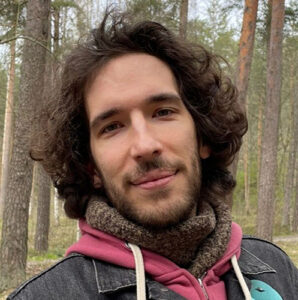
Rainforest Scully-Blaker
Assistant Teaching Professor, College of Professional Studies
Rainforest Scully-Blaker is an Assistant Teaching Professor and the local program lead of the MPS in Digital Media program at Northeastern University’s Vancouver Campus. Prior to working at Northeastern University, Scully-Blaker held positions as a Research Associate at the University of Michigan, a Postdoctoral Research Fellow in the Centre of Excellence for Game Culture Studies at Tampere University (Finland), and as a Lecturer in Game Design at Uppsala University’s Gotland Campus (Sweden). In addition to working at Northeastern, he also maintains affiliations with both the Intersectional Tech Lab at the University of Michigan and the Institute for Research on Digital Literacies at York University.
Scully-Blaker’s expertise spans multiple disciplines, including informatics, game design, and media studies. As a researcher, he has written extensively on games as critical, cultural objects through topics like cozy games, slow gaming, speedruns, and tandem play. His work appears in journals like Game Studies, Critical Studies in Media and Communication, Configurations, and the International Journal of Cultural Studies. His more recent research has also begun to consider the social and political underpinnings of LLMs as “speculative technologies” and how our chatbots affect our work and our play.
His first book, Gaming Exhaustion (Duke University Press) will be released April 2027.
Education
● Ph.D. and MS in Informatics from UC Irvine (2022)
● MA in Media Studies from Concordia University (2016)
Timothy Edmunds
Part-Time Lecturer, Khoury College of Computer Sciences
(he/him)
Timothy Edmunds is a professor at the Khoury College of Computer Sciences at Northeastern University. He earned his bachelor’s from the University of British Columbia and his doctorate from Rutgers University. His area of teaching includes discrete mathematics, algorithms, data structures, and statistics.
Prior to joining Northeastern, Edmunds worked as a postdoc at the University of British Columbia and as an instructor at the British Columbia Institute of Technology.
In his free time, he enjoys orienteering.

Parsa Rajabi
Part-Time Lecturer, Khoury College of Computer Sciences
(he/him)
Parsa Rajabi is a part-time lecturer in the Khoury College of Computer Sciences at Northeastern University, based in Vancouver.
Rajabi’s interests include computer science education, human–computer interaction, and particularly AI education. He has taught computer science at numerous institutions, including Simon Fraser University (SFU), the University of British Columbia, and Langara College, covering domains such as software engineering, web development, and introductory human–computer interaction methods.
Beyond teaching, Rajabi leads Learnification Labs, which focuses on the ethical and responsible integration of AI-based teaching and learning tools in computer science courses and broader curricula. His work is rooted in open education principles, striving to create accessible, innovative, and inclusive learning environments.
Rajabi also serves as an advisor for an institution-wide task force at SFU, developing guidelines and policies for AI integration in education. Additionally, as a member of the open education advisory committee, he promotes the adoption and growth of open educational resources, advocating for learning opportunities that are more accessible, inclusive, and equitable for all students.
Rajabi enjoys his time away from computers by skiing, hiking, camping, and volunteering in the community.
Saeed Yazdanian
Part-Time Lecturer, Khoury College of Computer Sciences
Bio coming soon

Molly Sun
Part-Time Lecturer, College of Engineering
Molly Sun is a dynamic educator and accomplished product leader with a wealth of experience in software product management and a strong global perspective. She holds a Bachelor of Science in Management Information Systems from Northeastern University and a Master of Science in Enterprise Risk Management from Columbia University. She has further enriched her expertise with certifications in Google UX Design, Google Site Reliability Engineering, and Project Management from Cornell University. Molly has 12 years of software industry experience and 8 years of teaching experience.
In her role as a product leader, Molly successfully launched a variety of software products in fintech, e-commerce, B2B, and developer tools. Her specialization spans SaaS, PaaS, and data, with a proven track record of scaling complex, user-centric platforms and leading high-performing teams. Her ability to craft long-term strategies and deliver impactful, innovative solutions has solidified her reputation as a results-driven product leader.
As an educator, Molly is passionate about fostering active, engaging, and practical learning environments. Her teaching methodology is highly adaptive, with each class tailored to meet the unique needs of her students. She incorporates real-world applications, hands-on activities, and interactive discussions to ensure her students develop practical skills and a deeper understanding of the material. Molly’s approach emphasizes critical thinking, collaboration, and innovation, empowering her students to excel in dynamic and interconnected professional landscapes.
Drawing from her extensive international experience—having lived in 10 cities and travelled to over 40 countries—Molly enriches her teaching by fostering cross-cultural understanding and global perspectives. Over the past eight years, she has taught business and STEM-related subjects to students at the high school, undergraduate, and graduate levels, preparing them to navigate and lead in a rapidly evolving world.
Beyond her professional and academic roles, she is a musician and entrepreneur, combining creativity and strategy to inspire innovation and empower others.
Education
BS in Management Information Systems, Northeastern University
MA in Enterprise Risk Management, Columbia University
Fatemeh Ahmadi Abkenari
Part-Time Lecturer, College of Professional Studies
Bio coming soon
Nina Rajabi Nasab
Part-Time Lecturer, College of Professional Studies
Bio coming soon