Do You Need a Master’s Degree to Work in Health Informatics in Canada?
June 24, 2026

The countless entry points into the field of health informatics can make it appealing as a career option, but potentially confusing when it’s time to choose the right educational route.
Do you need a master’s in health informatics, or is it enough to have an undergrad degree and practical experience? Does an advanced degree only make sense when pursuing leadership roles?
While professionals can enter the field of health informatics with an undergraduate degree, employers are increasingly seeking the types of skills taught by graduate-level education—predictive modelling, data privacy experience, and an understanding of how to handle the complexities of AI.
As an interdisciplinary field, health informatics is made up of vastly different roles that may not have the same educational threshold. Computer engineers, public health specialists, and nurses all have relevant skills, for example, but completely different knowledge gaps to fill.
Programs like the Master’s in Health Informatics at Northeastern University’s Vancouver campus anticipate the field’s future needs and prepare graduates for coming trends. For those seeking upward mobility and flexibility across public and private sectors, it’s increasingly strategic to obtain a specialized degree.
Key Takeaways
- • You do not always need a master’s degree to work in health informatics in Canada, especially for some entry-level or adjacent roles.
- • A master’s degree can be especially valuable for professionals pursuing specialized, leadership-track, analytics, or AI-adjacent roles.
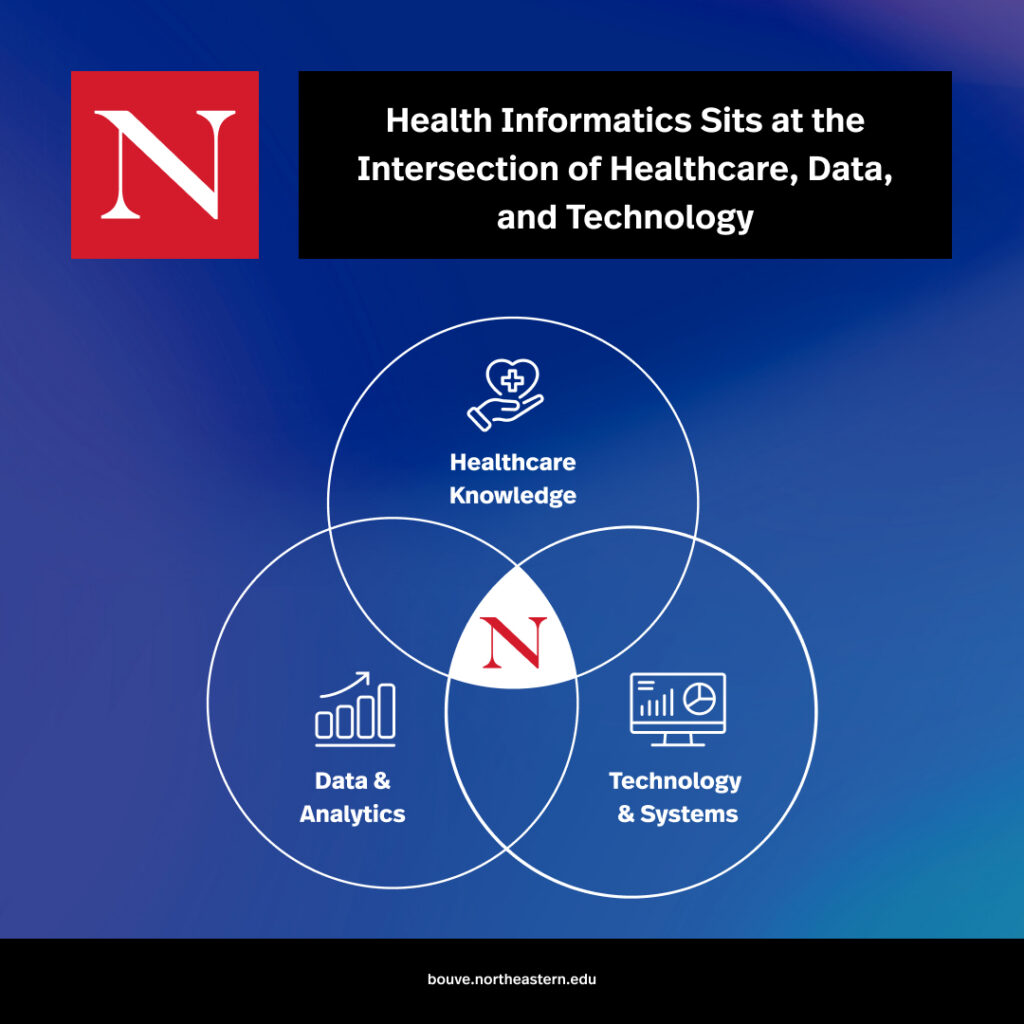
- • Health informatics rewards professionals who can connect healthcare knowledge with data, technology, systems thinking, and communication.
- • Clinicians, technical professionals, analysts, and career changers may benefit from graduate study in different ways depending on their background.
- • Northeastern’s MS in Health Informatics – Vancouver is designed to help students build cross-functional skills for Canada’s evolving digital health landscape.
Can You Work in Health Informatics Without a Master’s?
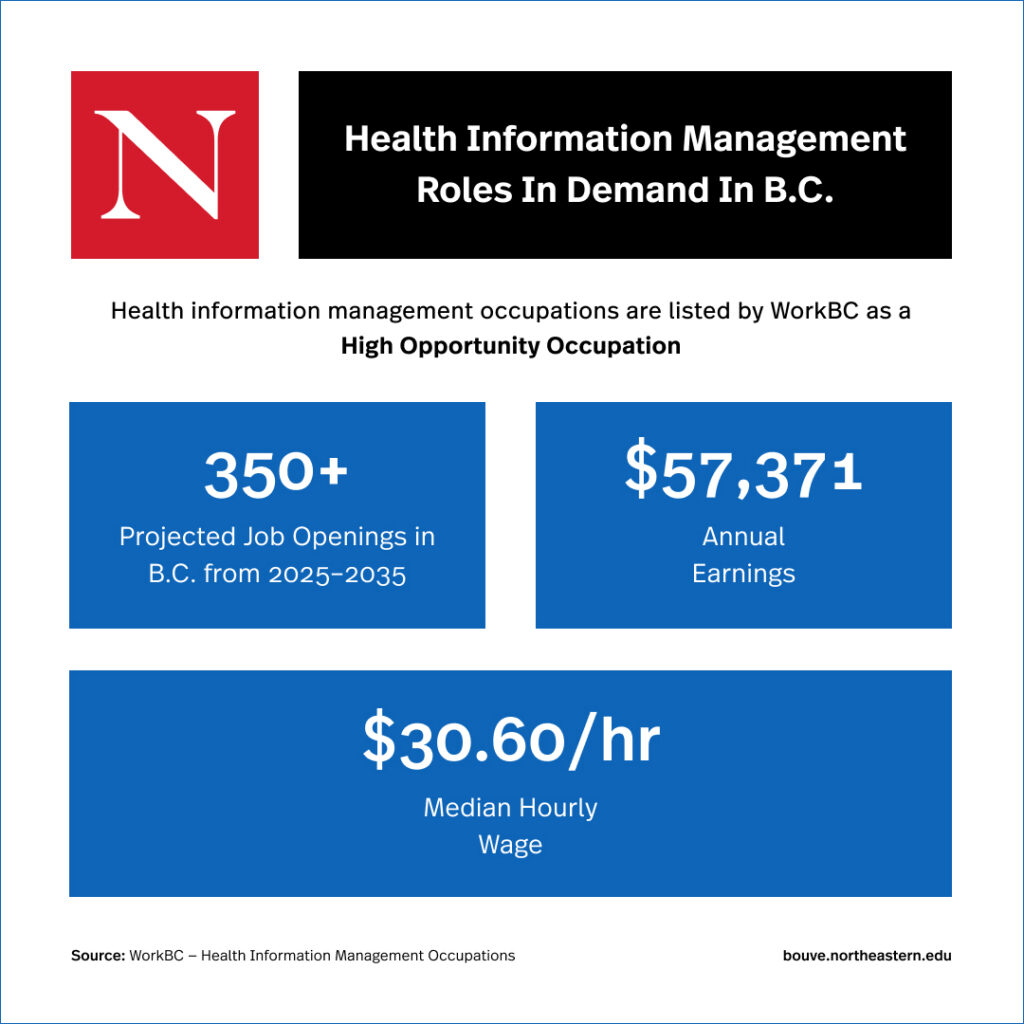
Entry-level roles in health informatics still exist—WorkBC’s profile of health information management occupations shows that some related roles typically begin with a college diploma or apprenticeship rather than a master’s degree.
Yet as the field evolves, many higher-growth opportunities are likely to require more specialized knowledge across healthcare, data, systems, and AI.
Professionals who are currently working in related disciplines like systems analysis, pharmacy tech, and nursing are already using informatics on the job. As these workers learn new applications for their skills, their expertise will set the standard for incoming professionals.
Another factor is the government’s growing commitment to technological advancement.
“If you look at healthcare in Canada, I think this sector has been very conservative in terms of using technology, especially using AI, predictive modelling, and data analytics,” says Ryan Rad, Associate Director of the MS in Health Informatics-Vancouver program.
“Right now, there is a massive digital transformation across provincial health systems. Canada has started to shift toward an integrated electronic health record (EHR), so that creates a supply gap for professionals who understand both clinical workflows and data architectures.”
When Does a Master’s Degree Make the Biggest Difference?
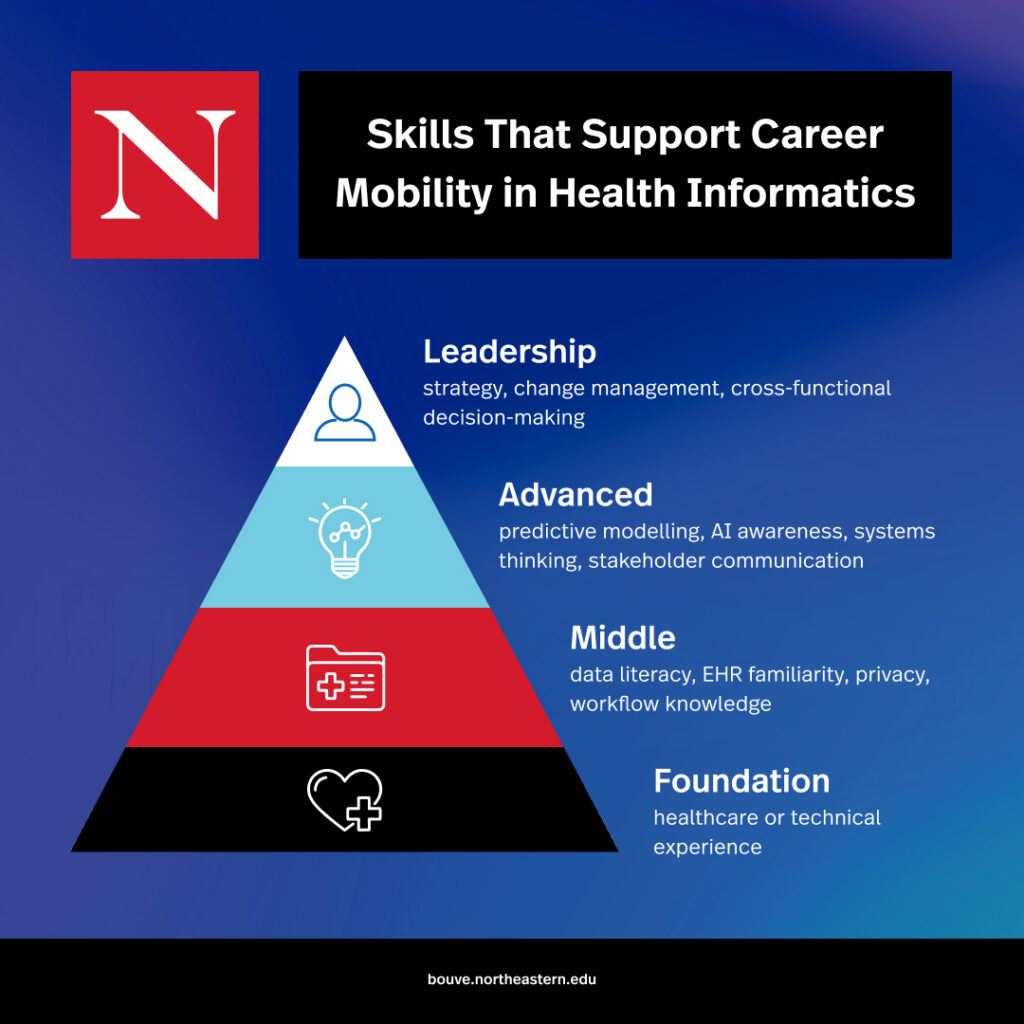
In the private health sector, some organizations have been faster to adopt AI and analytics tools than others. Many workers are able to grow their skills in existing roles and leverage them to pursue high-level positions without pursuing further education. However, it typically takes time, working on complex projects, and exposure to diverse environments to build leadership skills alongside technical expertise.
A master’s degree for clinical informatics makes the most sense for analyst career paths that involve high-level, strategic thinking and interdisciplinary knowledge, such as:
- • Leadership-track roles: Project managers, systems managers, and health information managers work at various levels of an organization leading teams that develop EHR databases and data models.
- • Director-level expectations: Directors, executives, and chief information officers in IT or clinical settings oversee other analysts, clinicians, and cybersecurity specialists. In these top roles, professionals need strategic and regulatory knowledge in addition to technical and/or clinical experience.
- • Specialized, data-intensive, AI-influenced roles: AI-adjacent roles in data privacy, analytics, clinical decision support, and responsible technology implementation, represent somewhat of a new frontier. These roles are pioneered by specialists who can design systems and test the strengths and weaknesses of machine learning, data modeling, and cybersecurity tools.
What Skills Can a Graduate Program Help You Build?
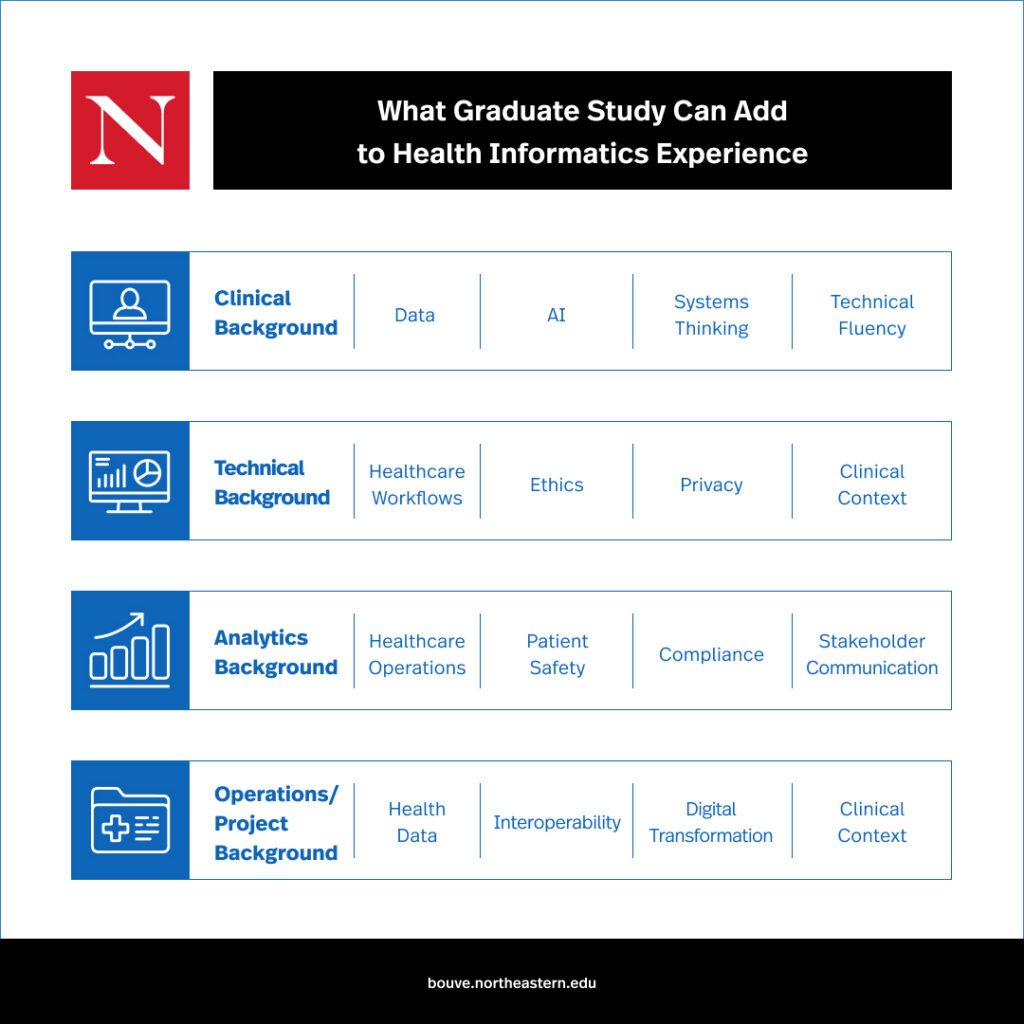
An undergraduate education in health informatics focuses on foundational knowledge and skill-building in a specific discipline. Yet, health informatics professionals often have to consider how healthcare and information technology interact when complex human issues are involved:
- • How data collection affects privacy
- • How AI modelling affects patient safety
- • How public policy affects systems design
It takes a deeper understanding of the cross-functional factors at play to develop health data workflows that actually benefit the public. Even when a master’s degree isn’t required for health informatics jobs, having a comprehensive education may position you to advance faster. A master’s level education prioritizes decision-making and problem-solving skills in areas like ethics and systems analysis, giving you the experience to tackle complex issues.
Health Data Ethics
Awareness of ethical issues is necessary for anyone entering the health informatics field, whether you have a clinical, analytics, or engineering background. The expansion of health data is happening rapidly, and policies defining the right and wrong uses of health records have to keep up with these changes.
In the health sector, trust is based on a mutual agreement that the collection and analysis of private health data will support patient well-being without sacrificing privacy or autonomy. When designing systems and interpreting data, it’s crucial to consider how each practice could impact public health at every stage.
Predictive Modelling
More data doesn’t automatically lead to better health outcomes, especially if there’s bias when collecting or interpreting information. Data analysts and engineers have the challenging task of developing algorithms that accurately evaluate information, identify risks, predict outcomes, and provide evidence-based insight.
Systems Thinking
By understanding how healthcare systems work, data analysts can design data systems and processes that store and deliver information efficiently and safely.
Cross-Functional Communication
Integrating technology into healthcare means getting administrators, clinicians, IT professionals, patients, and policymakers on the same page. Leaders in health informatics must be skilled at developing clear goals, collaborating with stakeholders across the full spectrum of healthcare, and communicating what solutions are needed.
Deeper Technical Fluency
A master’s in health informatics can draw upon broader technical knowledge and cultivate the specific expertise needed for healthcare decision-making. The human component of healthcare doesn’t allow for purely analytical thinking. Professionals in these fields need to think critically about potential threats, public access, user behaviour, and algorithmic bias, so they can develop solutions to reduce vulnerabilities.
Who Might Benefit Most From a Master’s in Health Informatics?
New career fields in AI and data science are emerging every day, and employers will continue adding to the list of technology skills they want job candidates to have. Given the cost of higher education and how quickly technology evolves, you might wonder if it’s worth it to chase the latest trend.
The ROI of an informatics degree depends on how much (or how little) career mobility you’ll gain long-term. One group that may benefit includes clinicians who want to build stronger technical and data skills.
Rad makes a valuable point about informatics: “It’s definitely not going to replace healthcare professionals, but it’s going to replace anybody in healthcare who doesn’t know how to use the technology.”
Technical professionals entering healthcare can also benefit from a health informatics degree. The healthcare landscape comes with more risks and restrictions, ranging from regulatory compliance issues to health data ethics. Bridging this gap allows experienced technical professionals to adjust their thought processes to fit the healthcare sector’s intensive standards.
How to Decide Whether You Need the Degree for Your Goals
Earning a master’s degree doesn’t offer the same advantages for everyone, and for some professionals, it’s better to explore the field before investing in advanced education.
Are you looking for entry-level exposure or specialization? Both healthcare and information technology are broad sectors that feed into other fields. If you’re just starting out in one of these sectors, you can clarify your goals by gaining experience before choosing a niche.
If you’re an early-career professional and plan to stay within your primary discipline, combining practical experience with certificates or degree programs tailored to your field might be the best option. Advancing your skills within an organization may also help you identify a more specialized path before committing to graduate study.
Do you want to expand upon your discipline or eventually pursue leadership roles? A clinical informatics master’s degree can help you develop the cross-functional skills to take on knowledge-heavy roles, manage teams, or develop information management strategies.
What Sets Northeastern’s Program Apart?
AI and informatics are influencing every industry, making it worthwhile to improve technical fluency regardless of your target career path. Northeastern University’s Master of Science in Health Informatics program, offered through the Vancouver campus, prepares students to assess healthcare organizations as systems, using data to improve efficiency, patient outcomes, safety, and compliance.
Designed for technical and non-technical students
Due to the program’s comprehensive approach, non-technical students are eligible alongside students with technical or clinical experience. Graduates develop cross competencies thanks to a diverse curriculum that brings together topics like organizational workflow design, machine learning, epidemiology, and biostatistics.
Interdisciplinary education model
Courses demonstrate the connectedness between information technology, healthcare management, and public welfare through interdisciplinary studies. To develop better data-driven healthcare practices, technicians need to understand how information is managed throughout the healthcare sector.
Through capstone projects, students have the opportunity to create real-world solutions and explore ethical uses of AI. “The question really comes down to where it augments our human expertise and where we can let AI play a role,” Rad explains. “I really think graduates of our program are going to be in a good place to actually give advice to the industry about how we should be using AI in healthcare in a way that brings us benefits.”
Career support
Program participants learn from experienced analysts and clinicians and gain opportunities for internships and career placement. Nearly 100 percent of graduates secure employment within three months.
Do You Need a Master’s in Health Informatics to Stay Competitive?
Although you can work in health informatics without a master’s degree, having highly specialized training is increasingly beneficial as the field becomes more competitive. Clinical and technical roles are more interconnected than ever before. Professionals who develop skills across disciplines are in the best position to take on complex projects that will grow into new specializations.
If you want to prepare for this digital transformation, explore the MS in Health Informatics program at Northeastern University’s Vancouver campus to learn how data analytics is continuing to shape healthcare.
Want to know more? Reach out to our Northeastern admissions team to request more information and to better understand if health informatics is the right career path for you.