How to Become a Clinical Informatics Analyst: What the Role Looks Like in Canada (Responsibilities, Teams, and Tools)
June 29, 2026

When searching for new career options that offer long-term growth, vague job titles can sometimes get in the way of spotting a good opportunity. A case in point is the clinical informatics analyst role.
Does the job involve healthcare or computing? Analytics or IT support?
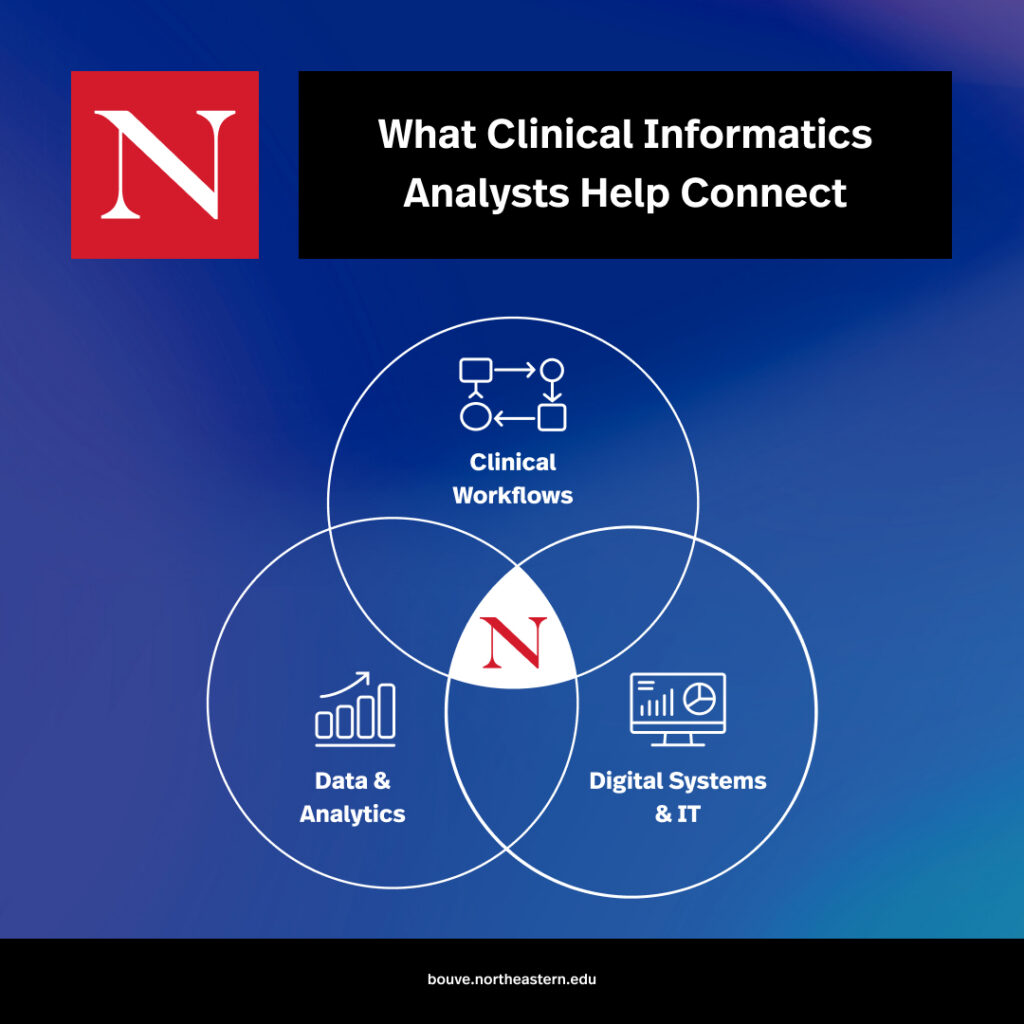
Simply put, the field can incorporate all of the above. Clinical informatics analysts bridge the gap between healthcare operations and digital systems. To coordinate health data and improve information systems, clinical informatics analysts need to understand the complex conditions involved in running a healthcare organization in Canada.
To become a clinical informatics analyst, you typically need a blend of healthcare knowledge, data and systems skills, and the ability to communicate with clinical, technical, and administrative teams.
Data analytics and IT jobs in the healthcare sector are interdisciplinary in nature, often requiring professionals to think like a project manager and a strategist. Here, we’ll discuss the core responsibilities of a clinical informatics analyst and the skills needed to stay competitive in the field.
Key Takeaways
- • Clinical informatics analysts help connect healthcare operations, clinical workflows, data, and digital systems.
- • The role often involves working with clinical teams, IT and data teams, and organizational leaders.
- • Common responsibilities include data processing, workflow analysis, system support, reporting, and stakeholder communication.
- • Tools used in the field may include EHR platforms, SQL, Python, Tableau, and Power BI.
- • A graduate degree in health informatics can help professionals build the clinical, technical, and leadership skills needed for analyst-oriented roles.
What a Clinical Informatics Analyst Does
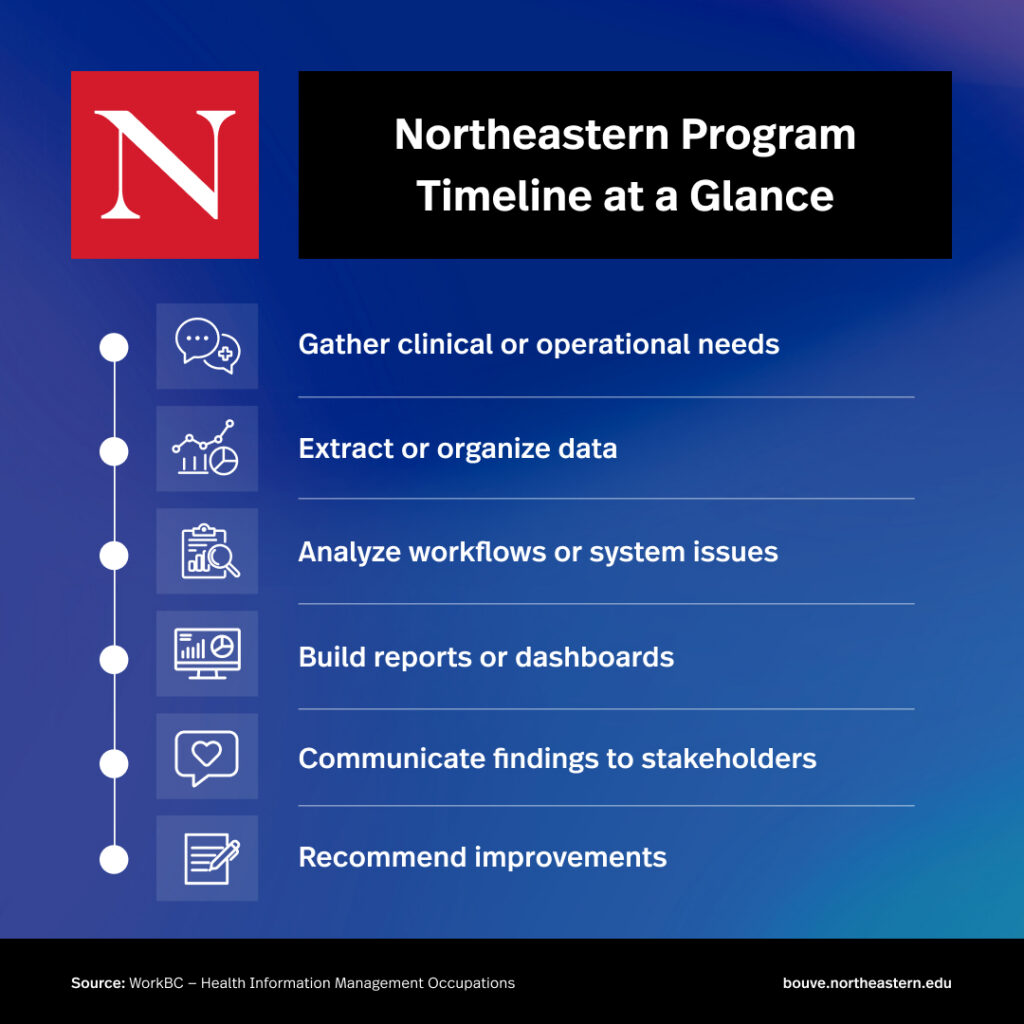
A clinical informatics analyst uses data to support clinical workflows and system improvement. Healthcare organizations collect massive amounts of data about internal operations, patient care, inventory, industry regulations, and public health trends. Analysts identify operational problems and provide technology and data solutions to make these processes more efficient.
Working at the intersection of technology and healthcare also requires collaboration with stakeholders. Analysts gather information about organizational needs and share recommendations based on data research.
“I think it really comes down to the ability to understand data, to process data, and to model data,” says Ryan Rad, Associate Director of the MS in Health Informatics-Vancouver program. “In terms of technology, familiarity with EHR platforms used in Canada such as Epic, Cerner, and Meditech are some of the essential or most commonly used ones here. Then, when it comes to working with data, there’s understanding data storage and data retrieval systems for data extraction, and obviously a little bit of programming understanding, such as Python programming, to analyze data and pre-process data.”
“One of the must-mentions here would also be Tableau or Power BI. These are very advanced visualisation tools,” he continues. “One of the major things that we work on in the program with students is not just understanding data, processing it, and modeling it, but being able to communicate that with stakeholders.”
Who Clinical Informatics Analysts Work With
Strong communication skills matter just as much as technical skill in the clinical informatics field. Analysts work alongside professionals who have varying levels of experience with clinical practice and technology, such as:
- • Clinical teams: Healthcare providers who work directly with patients, such as physicians, nurses, pharmacists, and therapists
- • IT and data teams: Technicians who oversee a healthcare organization’s computing infrastructure and data specialists who collect and analyze information
- • Leaders and decision-makers: Administrators, managers, educators, and policymakers who guide business operations or make decisions about public health
Think of clinical informatics analysts as interpreters who evaluate data and then present the findings to others in a “language” they can understand.
Core Responsibilities in the Role
At the core of informatics is the ability to investigate what is or isn’t working in healthcare processes. Having a strong technical foundation makes an analyst better at pointing out the potential sources of a problem and collecting the right information to develop a solution.
Some of the most important responsibilities of a clinical informatics analyst include:
Data understanding and processing
Clinical informatics analysts are often asked to coordinate raw data into systematized databases, where it can be stored safely and organized in a logical, easily retrievable format. To make these databases searchable, analysts may use queries, reports, dashboards, and analytic tools to find patterns and uncover trends.
With the help of technology like AI and predictive modeling, analysts can identify patterns in health data more efficiently. Analysts are usually working with multiple data sets at once and must use their knowledge of clinical workflows as context for interpreting the data.
Workflow analysis
Workflow analysis involves evaluating an organization’s business processes to streamline tasks, remove inefficiency, and make the best use of resources. Redundancy slows down the workflow and raises costs.
Using data, analysts can identify information that should be digitized and tasks that should be automated. In doing so, they’re able to advise healthcare administrations on the best way to allocate more staff and resources to higher-priority tasks.
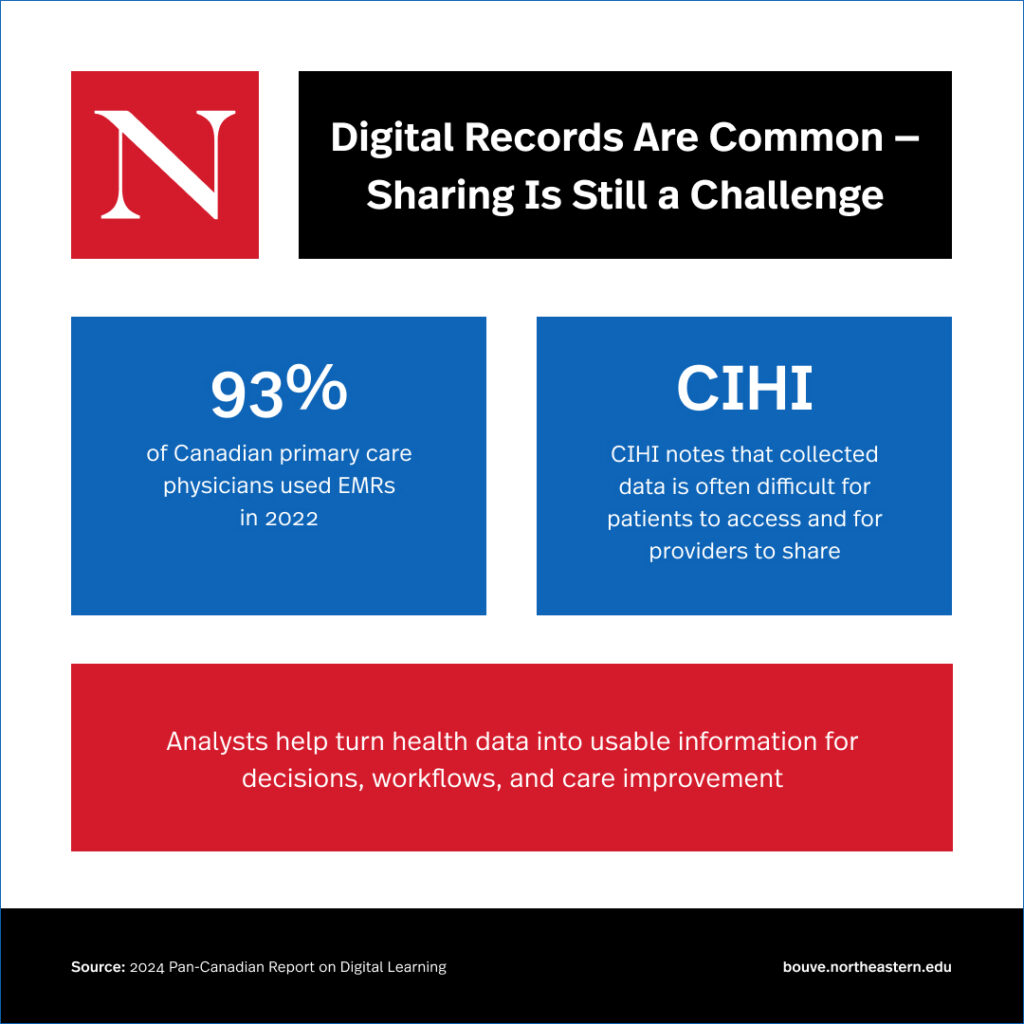
Across Canada, healthcare organizations are working to improve connected electronic health information and make patient data easier to access and share across care settings. At the same time, healthcare provider shortages have been an ongoing obstacle to increasing access and health equity. More than ever, workflow analysis is crucial for optimizing resources to achieve these goals.
System support and improvement
Information systems need ongoing maintenance and security checks, especially because they contain EHRs with sensitive patient data. Clinical informatics analysts may support system maintenance, identify workflow or usability issues, help manage risks, and recommend improvements. They also educate the workforce on how to use technology tools correctly and troubleshoot when issues arise.
Reporting and communicating findings
To drive organizational change, analysts must tell a clear and compelling story to stakeholders using data as evidence. Through visualisations, reports, and summaries, analysts are able to communicate their research findings and recommendations to a variety of audiences.
Common Tools and Platforms Used in Canada
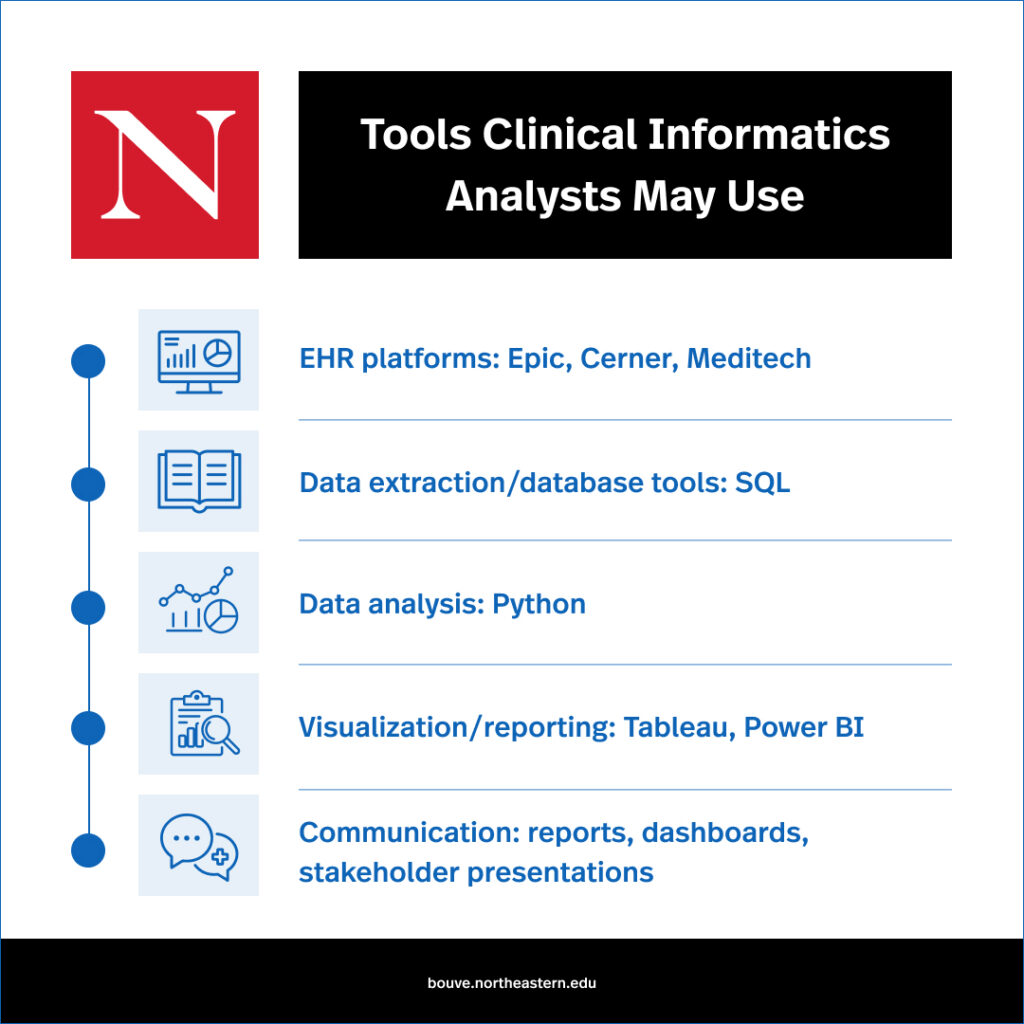
The most common tools a clinical informatics analyst uses in day-to-day operations are:
- • EHR platforms such as Epic, Cerner, Meditech for data management
- • SQL for database management and data extraction
- • Python for data analysis and preprocessing
- • Tableau or Power BI for visualisation
How to Prepare for a Clinical Informatics Analyst Career
If you’re interested in becoming a clinical informatics analyst, start building domain knowledge in healthcare. Although much of the job revolves around IT skills, the healthcare sector is heavily regulated with rules, processes, and ethical considerations that are specific to the industry.
To handle the core responsibilities of the role, learn data science and systems fundamentals. Healthcare organizations need technology solutions that take all of their operational and clinical needs into account, all while keeping health data secure. Build skills in programming and troubleshooting database software, and research how AI is currently being tested in healthcare.
Develop stakeholder communication skills, keeping in mind that different audiences may need the information tailored to their specific goals and perspectives.
Whether you’re currently in a technical or clinical field or planning to make a career change, consider getting a graduate education for more depth and career mobility. Clinical informatics degree programs offer specialized training and incorporate leadership skills like workflow design and project management.
How Northeastern Prepares You for Your Career as a Clinical Informatics Analyst
Starting a career in clinical informatics allows you to grow professionally within two vital industries, information technology and healthcare. Northeastern University’s Master of Science in Health Informatics program prepares graduates to apply their analytical skills to topics like systems design, organizational behaviour, workflow management, and public health statistics.
The program takes an experiential approach by exposing learners to real-world scenarios, processes, and technology. The curriculum also focuses on issues such as data modeling, reporting, patient experience, and machine learning through a business lens. In healthcare, it’s essential for professionals to prioritize ethical decision-making when managing confidential health data and integrating new technology.
Northeastern University equips graduates for success by including research projects and opportunities for job placement. Graduates learn from experienced professionals in the informatics field who have valuable insight about current challenges in healthcare. The goal of the program is to train professionals who are so well-rounded in technical and clinical expertise that they’re already thinking about how to solve problems and develop data-driven innovations.
Is a Clinical Informatics Analyst Career a Good Fit?
Careers that combine disciplines and require cross-functional skillbuilding offer the most long-term flexibility and advancement. Technology fields, in particular, intersect with all industries, providing countless opportunities to specialize and extend your expertise.
As a clinical informatics analyst, you have the ability to continue honing your skills across multiple specialties. However, succeeding in this field requires a strong passion for critical thinking, project management, and problem-solving.
If you’re interested in building the clinical, technical, and communication skills needed for informatics roles, explore Northeastern’s MS in Health Informatics – Vancouver or request more information to see whether the program aligns with your goals.